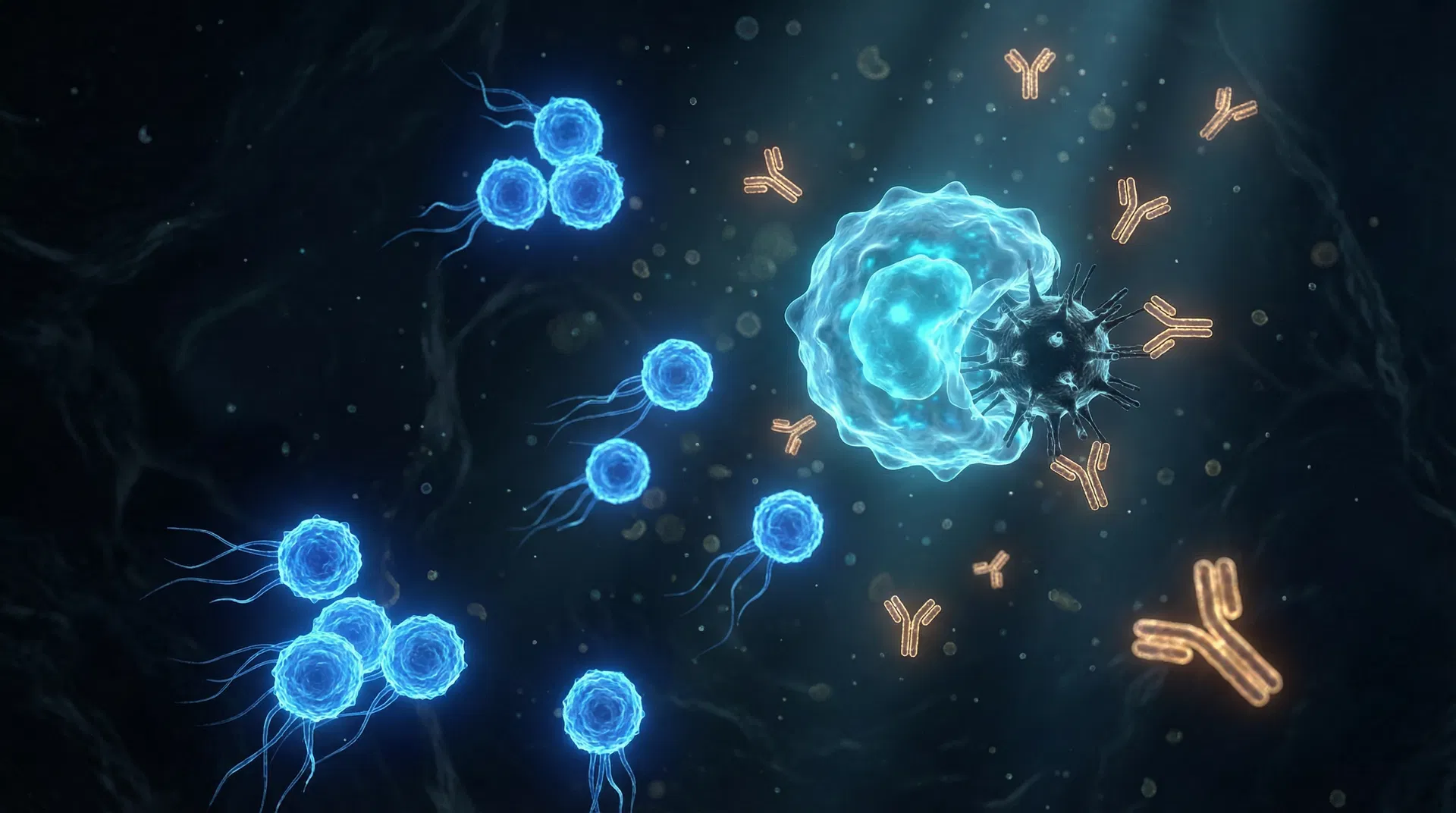
The Human Immune System
Explore the extraordinary defense network that protects your body from billions of pathogens every day. An interactive journey through innate and adaptive immunity.
Three Layers of Protection
The immune system uses a layered defense strategy with increasing specificity. Each layer works in concert to detect, contain, and eliminate threats.
Surface Barriers
Physical and chemical defenses — skin, mucous membranes, stomach acid, antimicrobial peptides, and commensal bacteria form the first wall against invaders.
Innate Immunity
Rapid, non-specific response activated within hours. Phagocytes, NK cells, and the complement system detect and destroy pathogens using pattern recognition.
Adaptive Immunity
Highly specific response that develops over days. T and B lymphocytes create targeted attacks and form immunological memory for future encounters.
Innate vs. Adaptive Immunity
Understanding the key differences between the two arms of the immune system is fundamental to immunology.
| Feature | Innate Immunity | Adaptive Immunity |
|---|---|---|
| Specificity | Non-specific (broad patterns) | Highly specific (antigen-specific) |
| Response Time | Immediate (0–12 hours) | Slow (days to weeks) |
| Memory | No immunological memory | Creates long-term memory |
| Key Cells | Neutrophils, Macrophages, NK cells, Dendritic cells | T cells (Helper, Cytotoxic), B cells |
| Receptors | Pattern Recognition Receptors (PRRs) | T-cell receptors (TCR), B-cell receptors (BCR) |
| Distribution | Nearly all life forms | Only jawed vertebrates |
| Components | Complement, cytokines, physical barriers | Antibodies, cytokines, perforins |
| Self/Non-self | Recognizes broad molecular patterns | Distinguishes specific antigens |
Explore Each Topic
Dive deeper into each aspect of the immune system through interactive content and detailed explanations.